Klos/
Ancient Nikaia
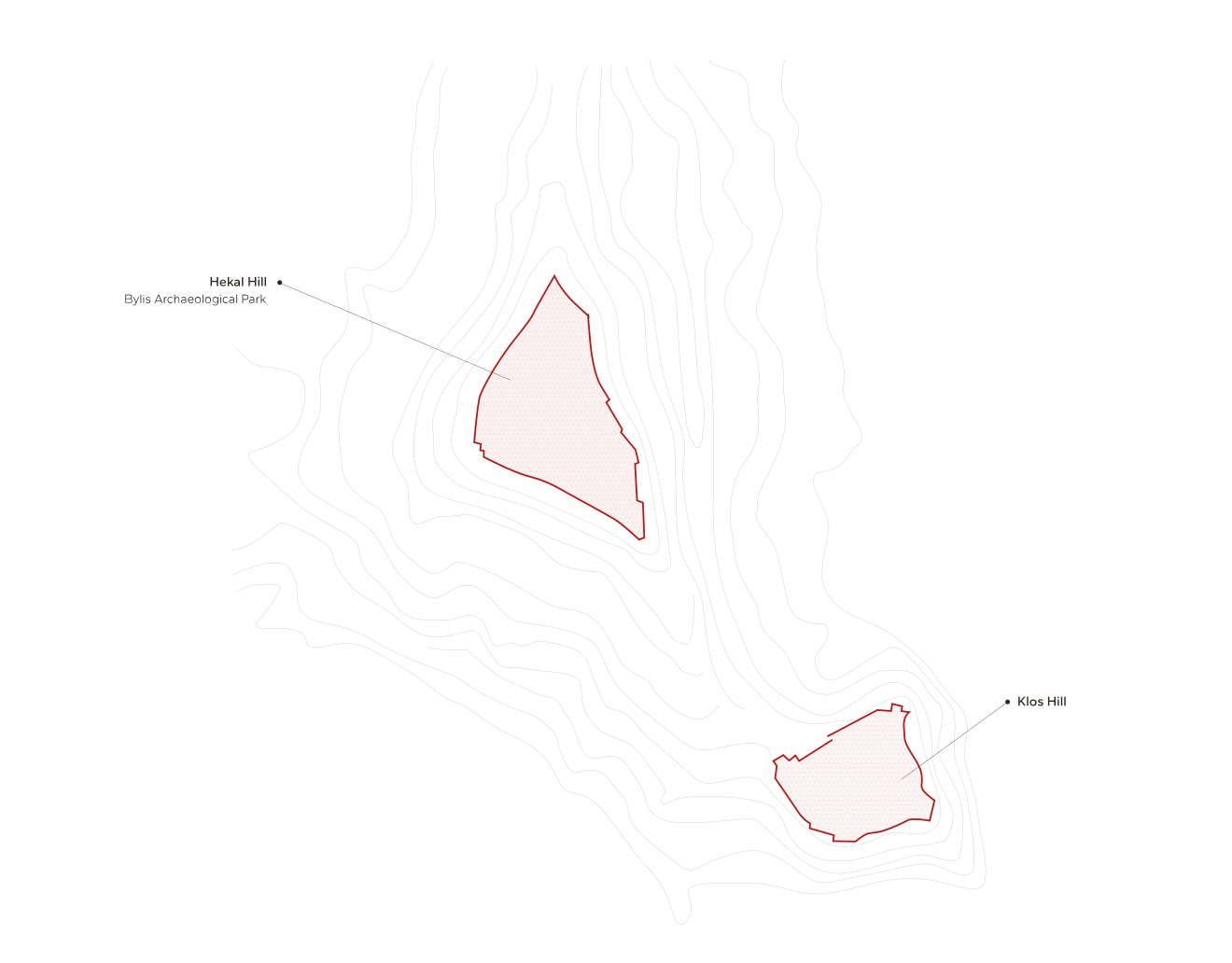
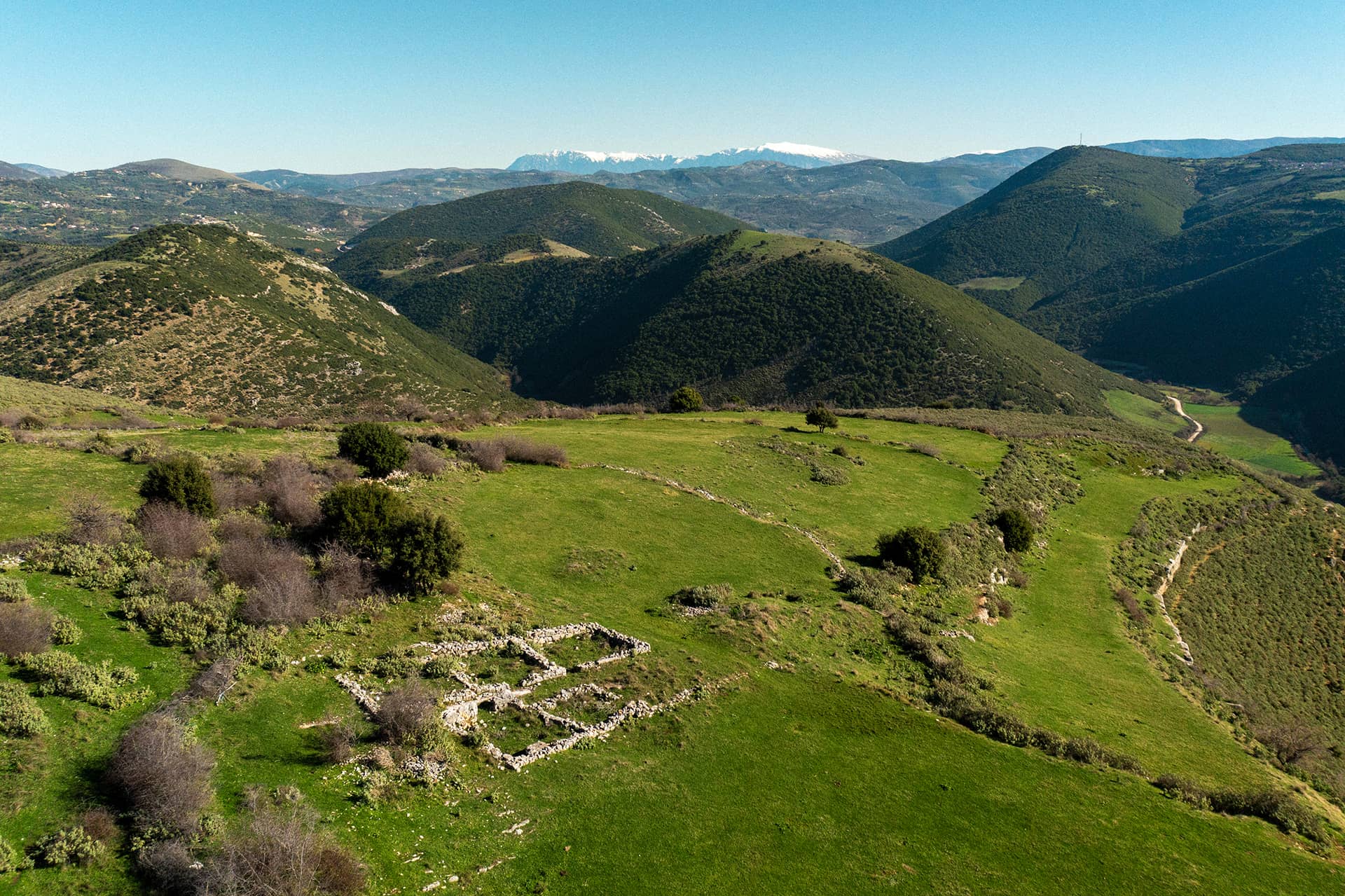
The ancient city of Klos was built on a hilly plateau, 355 m above sea level. The surrounding walls have a length of 1,850 meters and enclose an area of about 18 hectares.
In the first construction phase (second half of the 5th century BC), the walls were built with trapezoidal and polygonal blocks, while in the second phase (mid-4th century BC), with square blocks. The city had only one entrance and three towers placed at the most exposed defensive points.
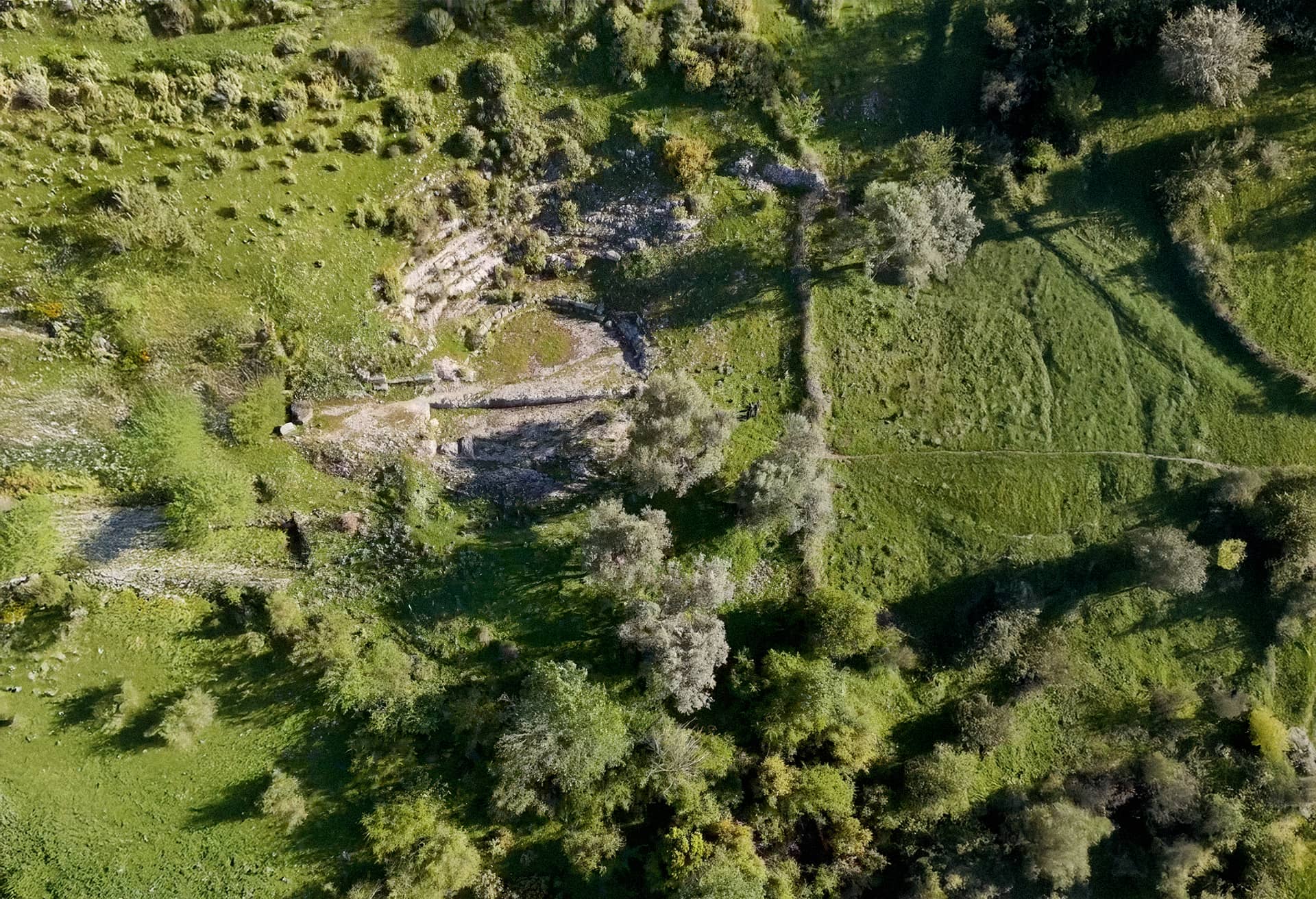
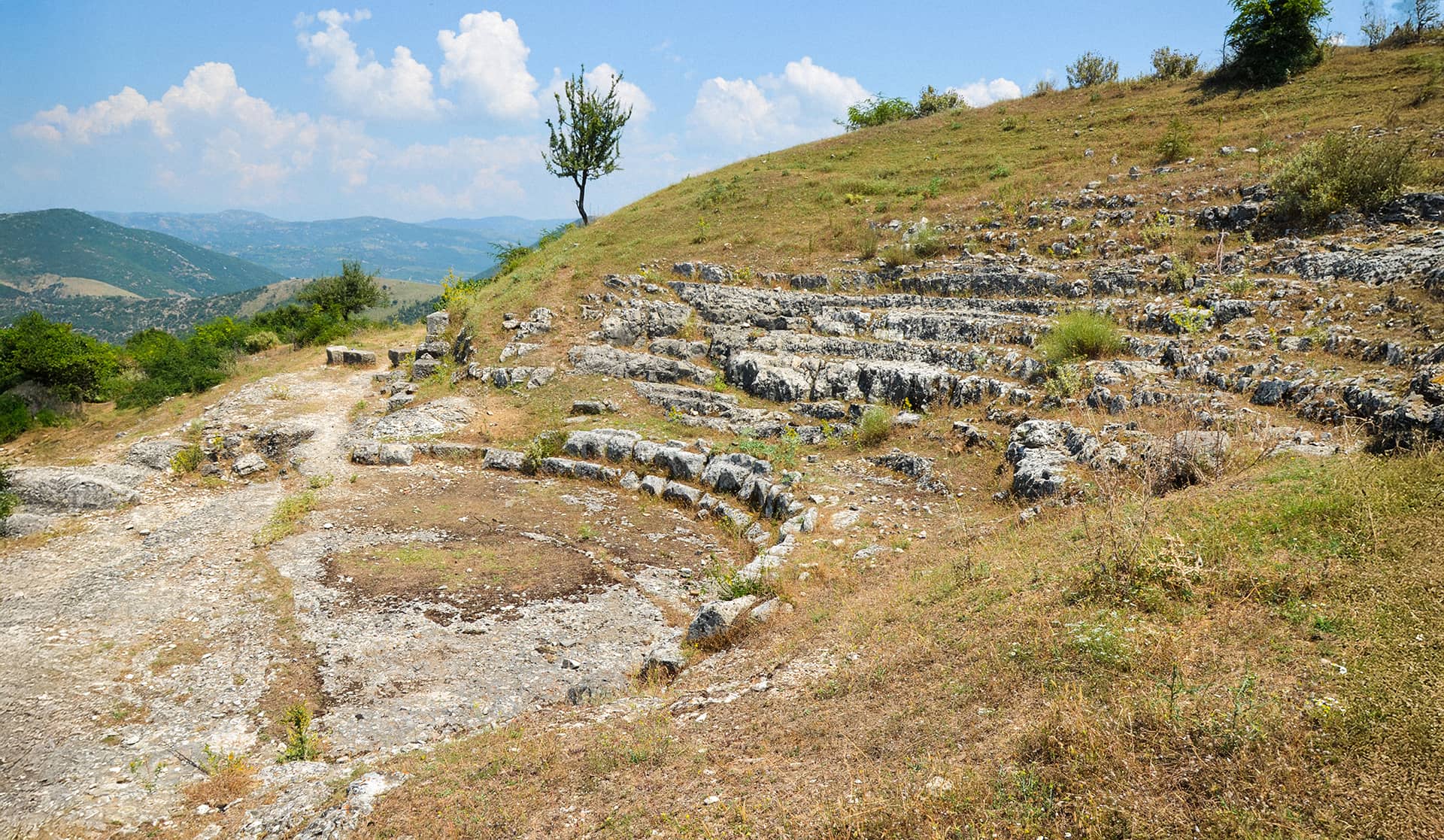
Around the mid-3rd century BC, the city’s agora took shape, where the theater and stoa were built. The ancient city of Klos represents one of the earliest urban centers of Illyria; inscriptions with the names of prytaneis discovered here testify to a developed social, economic, and political life within the framework of the Bylliones.

The Ancient City of Nikaia
Klos represents the earliest urban center in the territory of the Bylliones, developed upon the remains of an earlier local settlement. The initial phase of fortification, dating to the second half of the 5th century BCE, is traditionally linked with the city’s foundation. Based on the interpretation of an ancient inscription, the renowned scholar Louis Robert identified Klos with the city of Nikaia—an attribution that remains the most widely supported.
The nearby city of Byllis is believed to have been founded about a century later, around the mid-4th century BCE.
Their proximity—just one kilometer apart—has led some scholars to view Klos and Byllis as a twin-city system, with Klos perhaps retaining the name Nikaia. However, archaeological evidence suggests the existence of two distinct, independent urban centers with strong traditional and cultural ties. Some hypotheses even propose that the inhabitants of Klos played a foundational role in the creation of Byllis, though the motivations for such an undertaking remain historically unclear.
Location