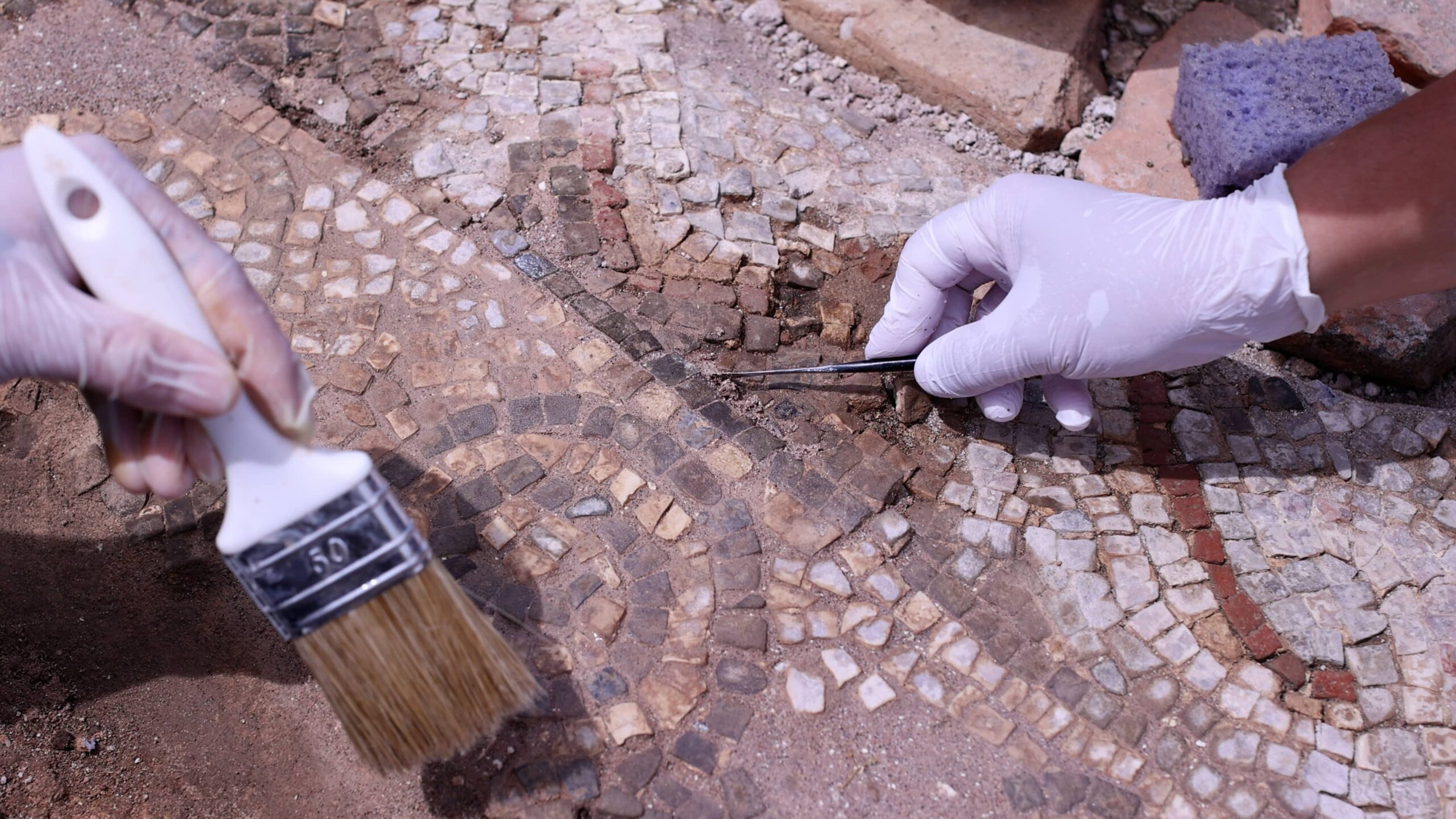
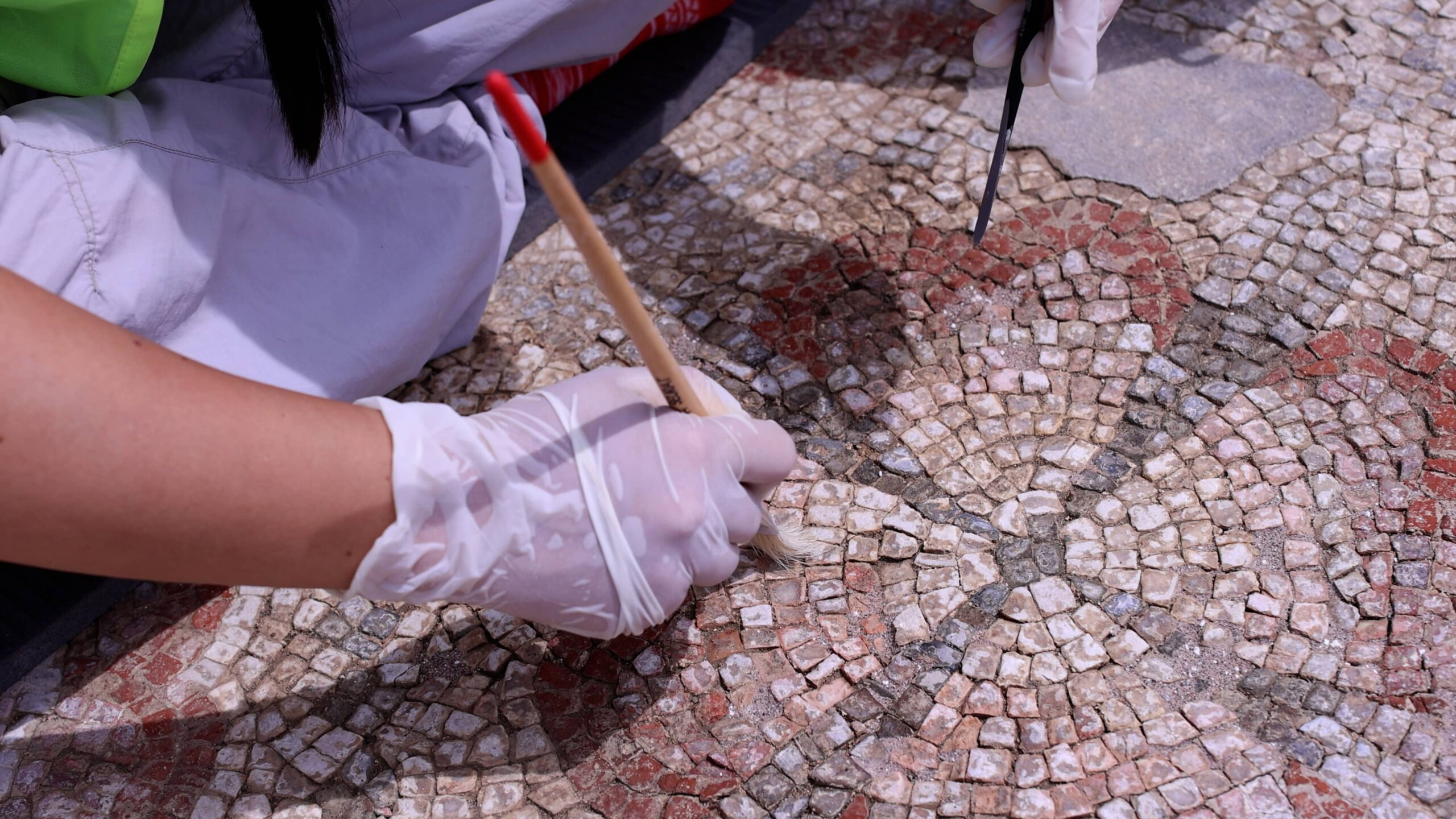
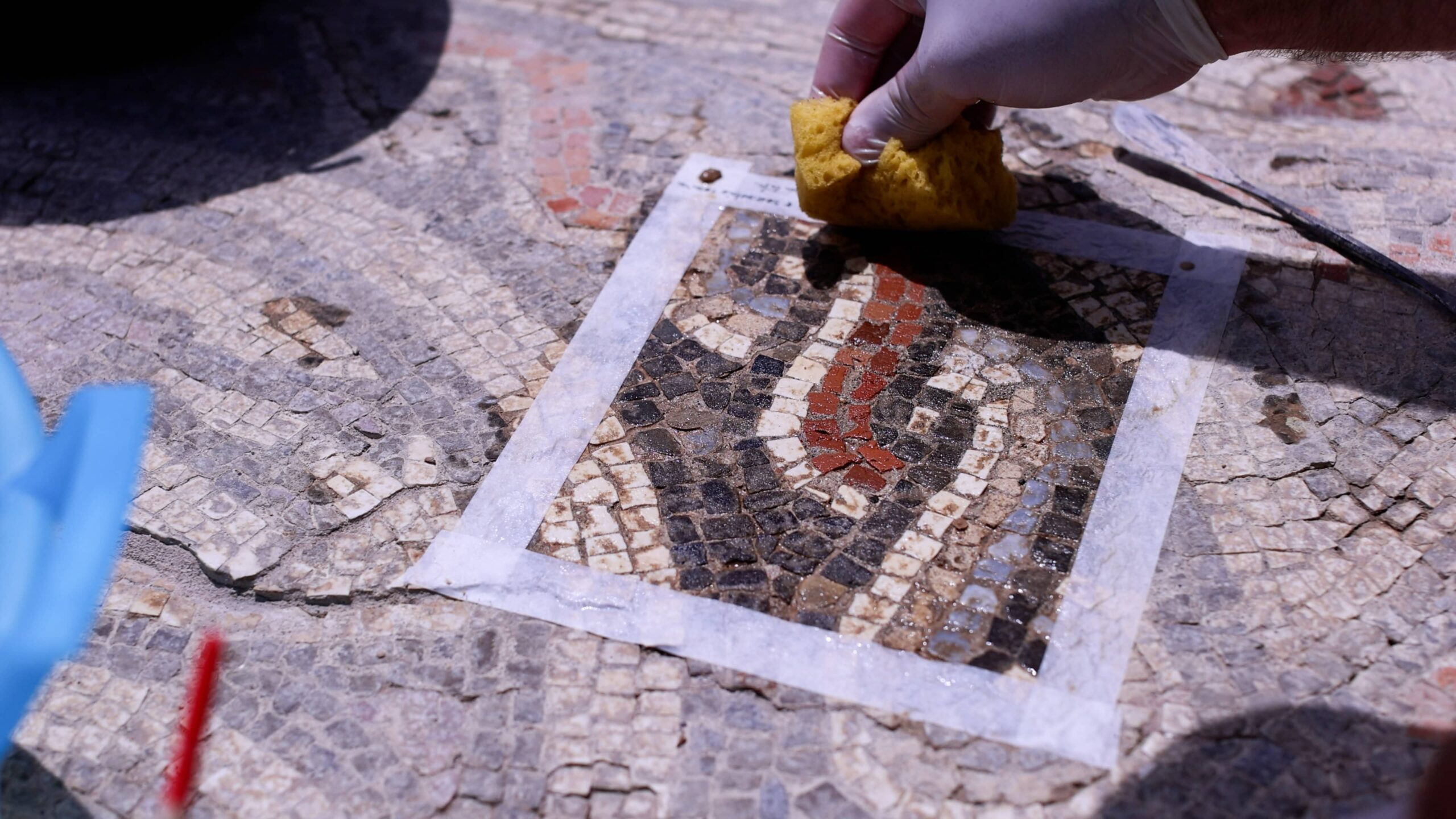
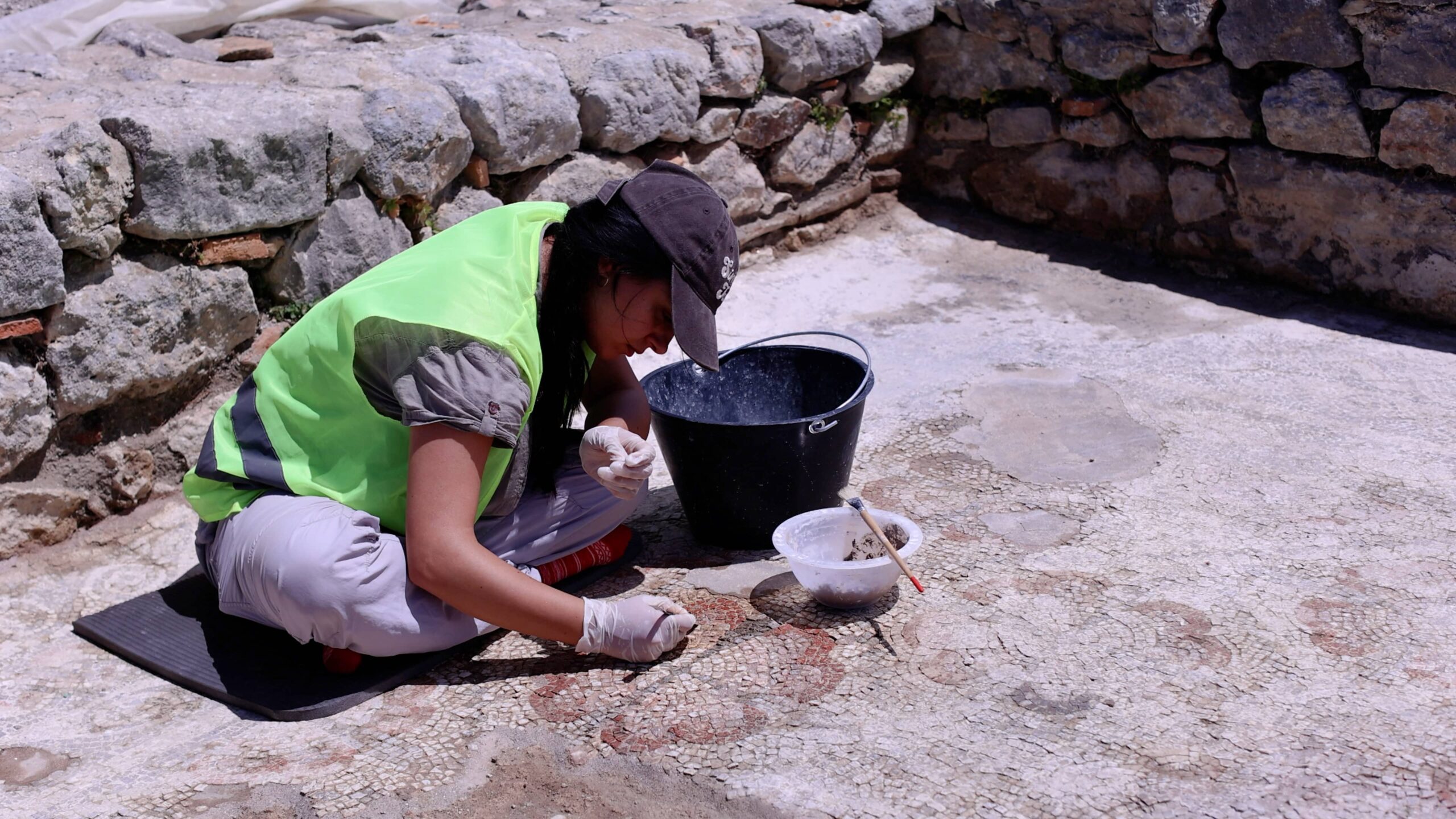
The conservation of the mosaic of Basilica B at the Archaeological Park of Bylis marks an important milestone in the implementation of the project “EU for Economic Development – Tourism-led Local Economic Development, with a Focus on Cultural Heritage”, funded by the European Union and co-funded and implemented by the Italian Agency for Development Cooperation (AICS) in partnership with the Ministry of Tourism, Culture and Sport.
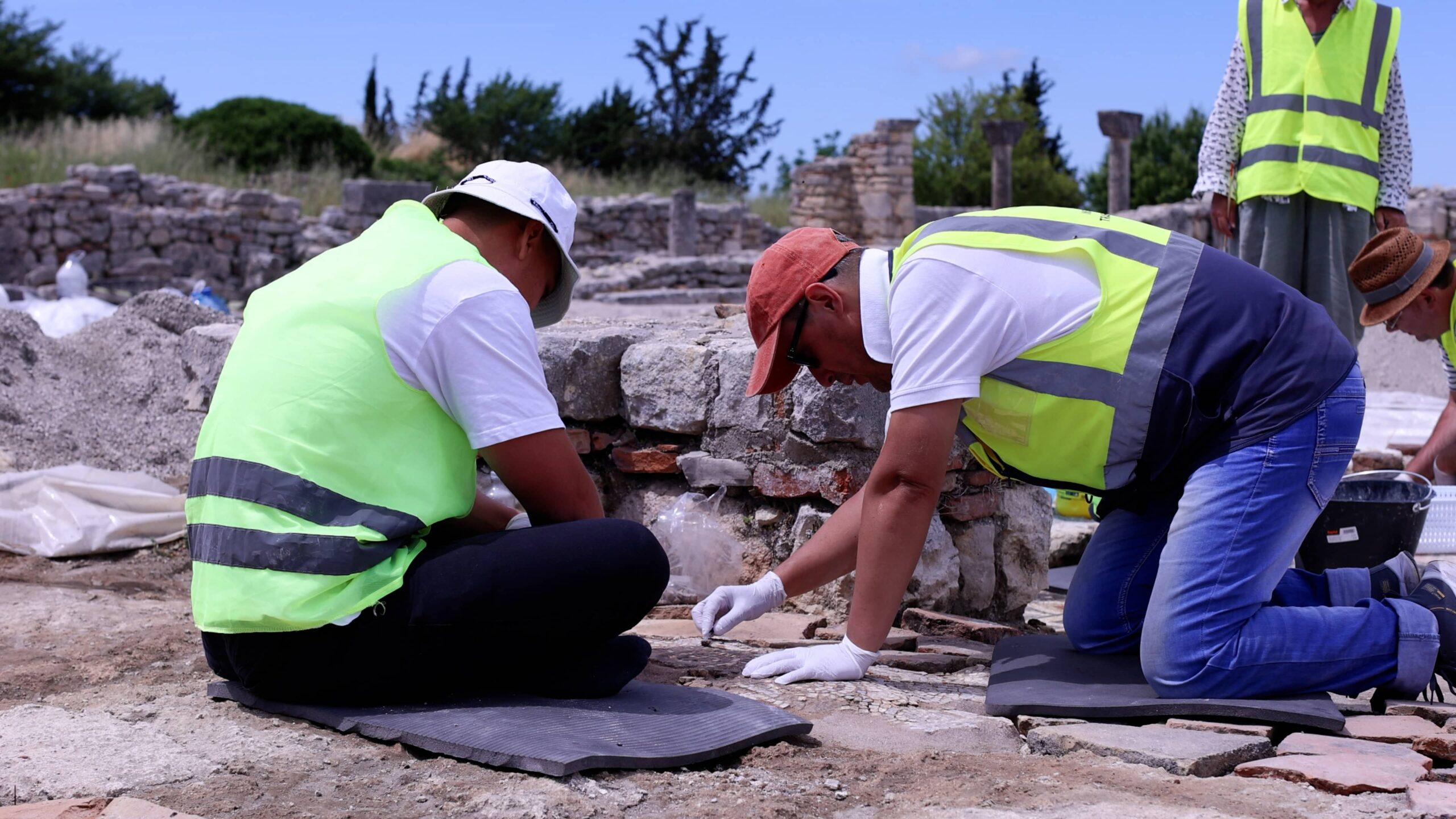
More than a conservation intervention, the restoration of the Basilica B mosaic was conceived as a unique learning and capacity-building experience through the implementation of the Scuola Cantiere (Open Restoration Site), an innovative model that combines heritage conservation with practical field training.
The initiative transformed the archaeological site into an open-air classroom where conservation professionals, employees of public cultural heritage institutions, university professors, students, and members of the local community worked side by side, gaining hands-on experience under the guidance of international and national experts.
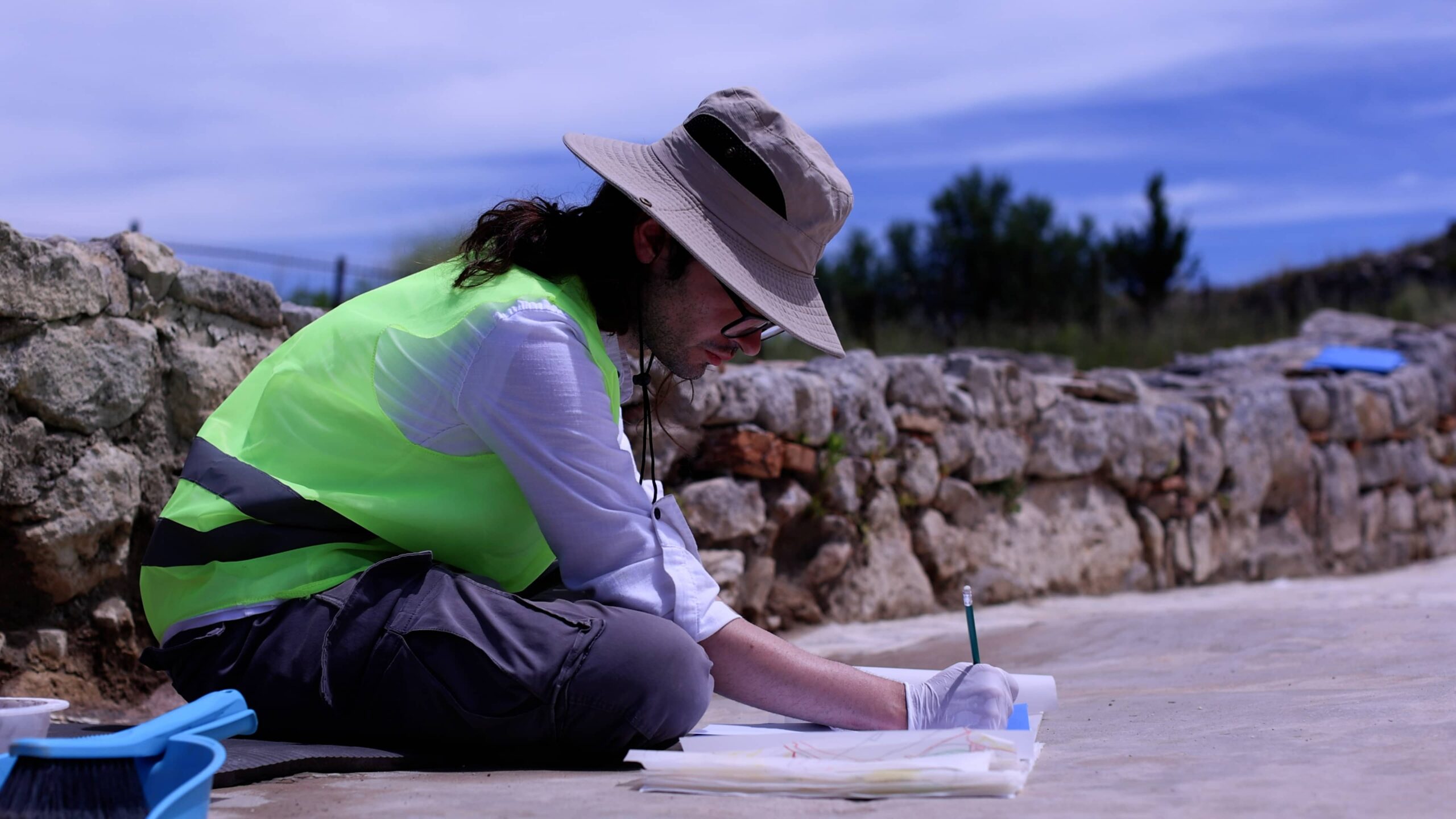
The restoration activities were carried out following extensive diagnostic investigations and documentation, applying the principle of minimum intervention to ensure the preservation of all historical and technical information related to the monument, including construction techniques, original materials and substrate systems. The intervention contributes to the long-term protection of one of the most significant monuments of the archaeological park while enhancing its accessibility and interpretation for visitors.
Implemented in partnership with Politecnico di Milano (POLIMI) and the Department of Archaeology and Cultural Heritage of the University of Tirana, the Scuola Cantiere provided participants with direct exposure to international conservation standards and methodologies. Combining the scientific expertise and practical experience of both institutions, the programme offered an integrated learning environment where academic knowledge was applied directly in the field. Through a combination of hands-on conservation activities, lectures, field exercises and technical discussions, participants strengthened their competencies in heritage documentation, conservation planning, restoration techniques and the sustainable management of archaeological sites. This collaborative approach promoted knowledge exchange between international and Albanian experts while contributing to the development of local capacities in cultural heritage conservation. In line with the Open Restoration Site concept, the conservation activities remained visible and accessible to visitors throughout the programme. Visitors to the Archaeological Park of Bylis were able to observe the restoration process, engage with experts and trainees, and gain a deeper understanding of the methods and challenges involved in preserving cultural heritage. This direct interaction transformed the restoration site into a living educational space, strengthening public awareness of heritage conservation while enriching the visitor experience at the park.
Beyond the conservation of the Basilica B mosaic, the training programme also included documentation and survey activities on the Byzantine fortification wall of Bylis, allowing participants to acquire practical skills in heritage recording, analysis and interpretation. These activities introduced trainees to modern documentation techniques and reinforced the importance of evidence-based conservation approaches.
The initiative brought together five professors from Politecnico di Milano and the University of Tirana, twelve university students, nine professionals from public cultural heritage institutions and representatives of the local community, creating a multidisciplinary learning environment that fostered knowledge exchange and collaboration between academia, public institutions and local stakeholders.
The Scuola Cantiere demonstrates how cultural heritage conservation can serve not only to protect archaeological assets but also to invest in people. By combining restoration, education and community participation, the initiative contributes to the development of a new generation of heritage professionals while strengthening local ownership and awareness of cultural heritage values.
As the various phases of the conservation works were documented and made visible to visitors, the intervention also became a tool for public engagement, showcasing the importance of conservation work and promoting the Archaeological Park of Bylis as a destination where heritage preservation, education and sustainable tourism development go hand in hand.
As the various phases of the conservation works were documented and made visible to visitors, the intervention also became a tool for public engagement, showcasing the importance of conservation work and promoting the Archaeological Park of Bylis as a destination where heritage preservation, education and sustainable tourism development go hand in hand.